Quest Design:
Tomb of Annihilation
This campaign ran for over 125 sessions in the span of 2 years.
CAMPAIGN OVERVIEW
While designing all the quests for this campaign, the most important thing that I adhered to was creating a sense of ever-growing dread, and a build up to the all powerful lich, Acererak. One major inspiration in my narrative and quest design process was influenced by the great Yoko Taro and his process in creating NieR & NieR Automata. The key thing I learned from his process, “backwards scripting”, is to construct the desired “ending” and working backwards from there. I took the idea of “backwards scripting” by focusing on the end goal of my quests, and then building choices players may take, as their consequences lead to the ultimate “ending” with Acererak.
Designing the “Lost City of Omu” Quest
Structure
The “Lost City of Omu” was designed to encourage players to explore an ancient city that houses 9 temples that each hold an artifact needed to enter the final location of the campaign, the “Tomb of Annihilation”.
This quest acts as a central hub to house over 20 locations, including the required 9 temples. Players are encouraged to explore the city as a whole to find hidden loot, meet unique NPCs, and fight a T-Rex Demi-God named, “The King of Feathers” in an ancient amphitheater.
I modified each location by adding new lore, details and history that would be directly related to the player characters. I added subtle worldbuilding by included the “misfortunes” of previous adventuring parties, and foreshadowed a “hidden” clan of Yuan-ti snakefolk stalking the players to kidnap them.
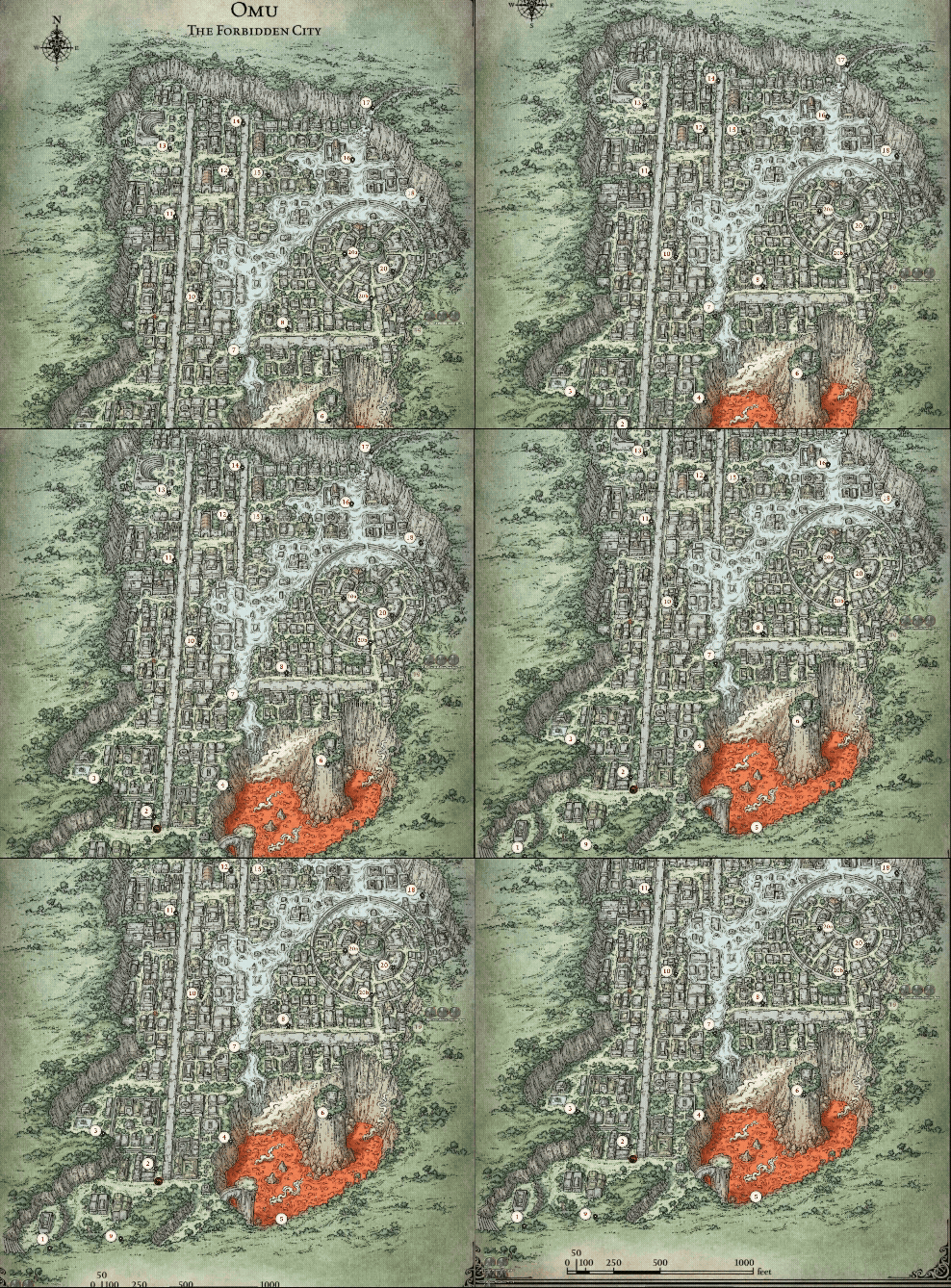
Lost City of Omu map provided by Wizards of the Coast
Scale & Discovery
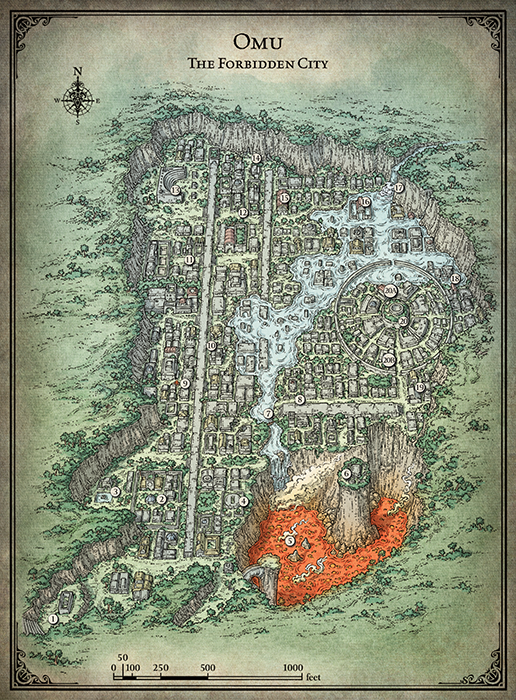
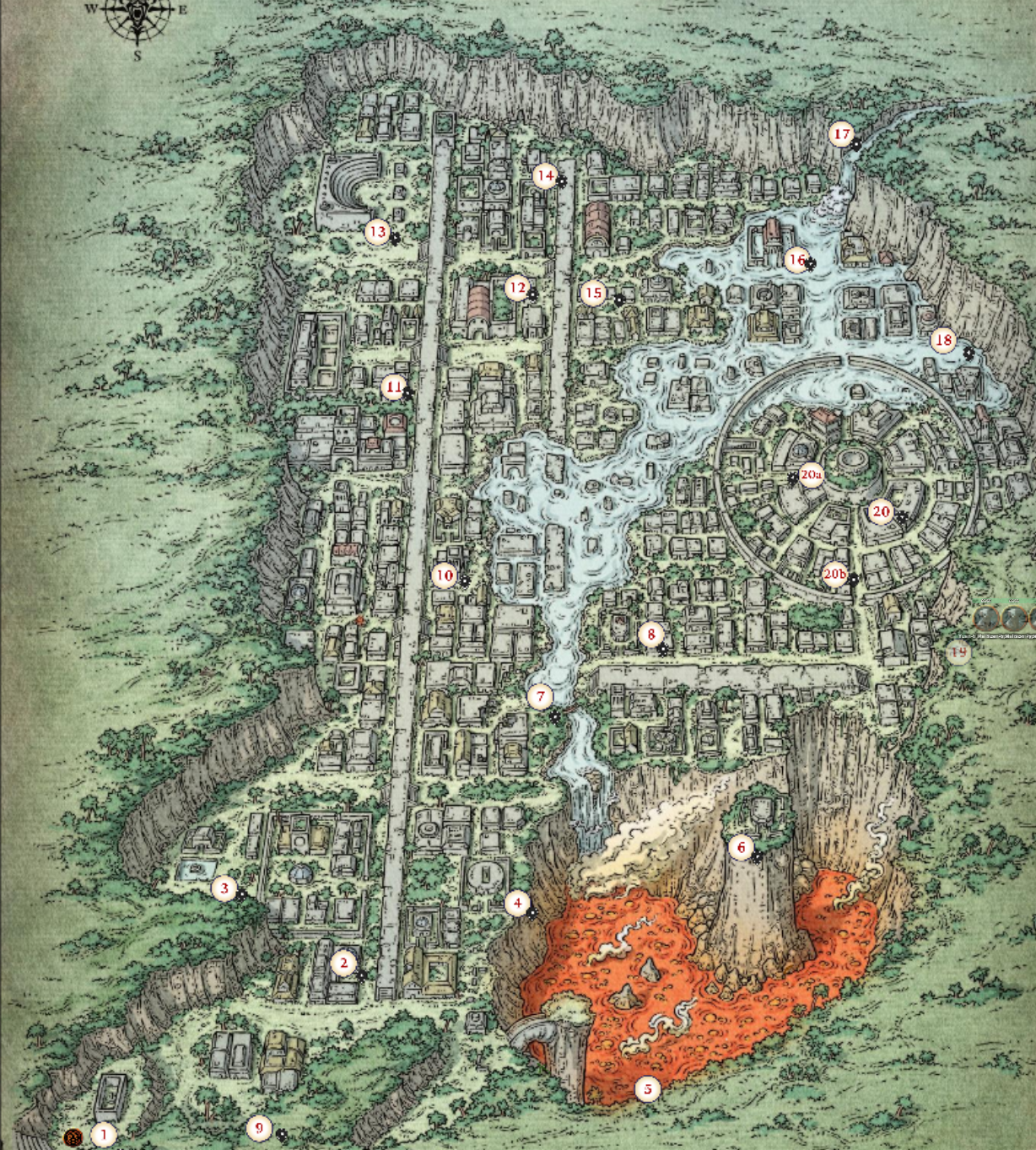
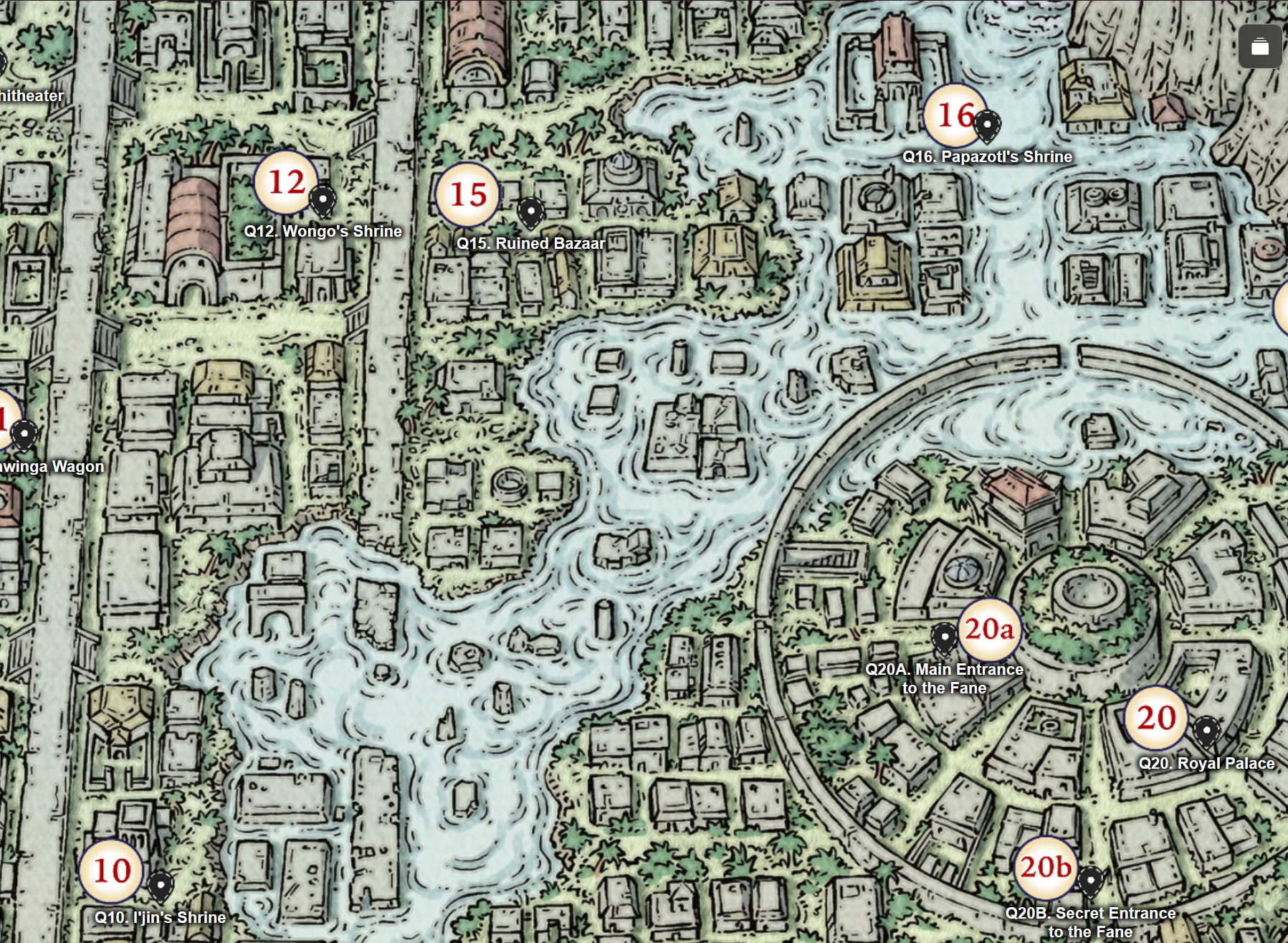
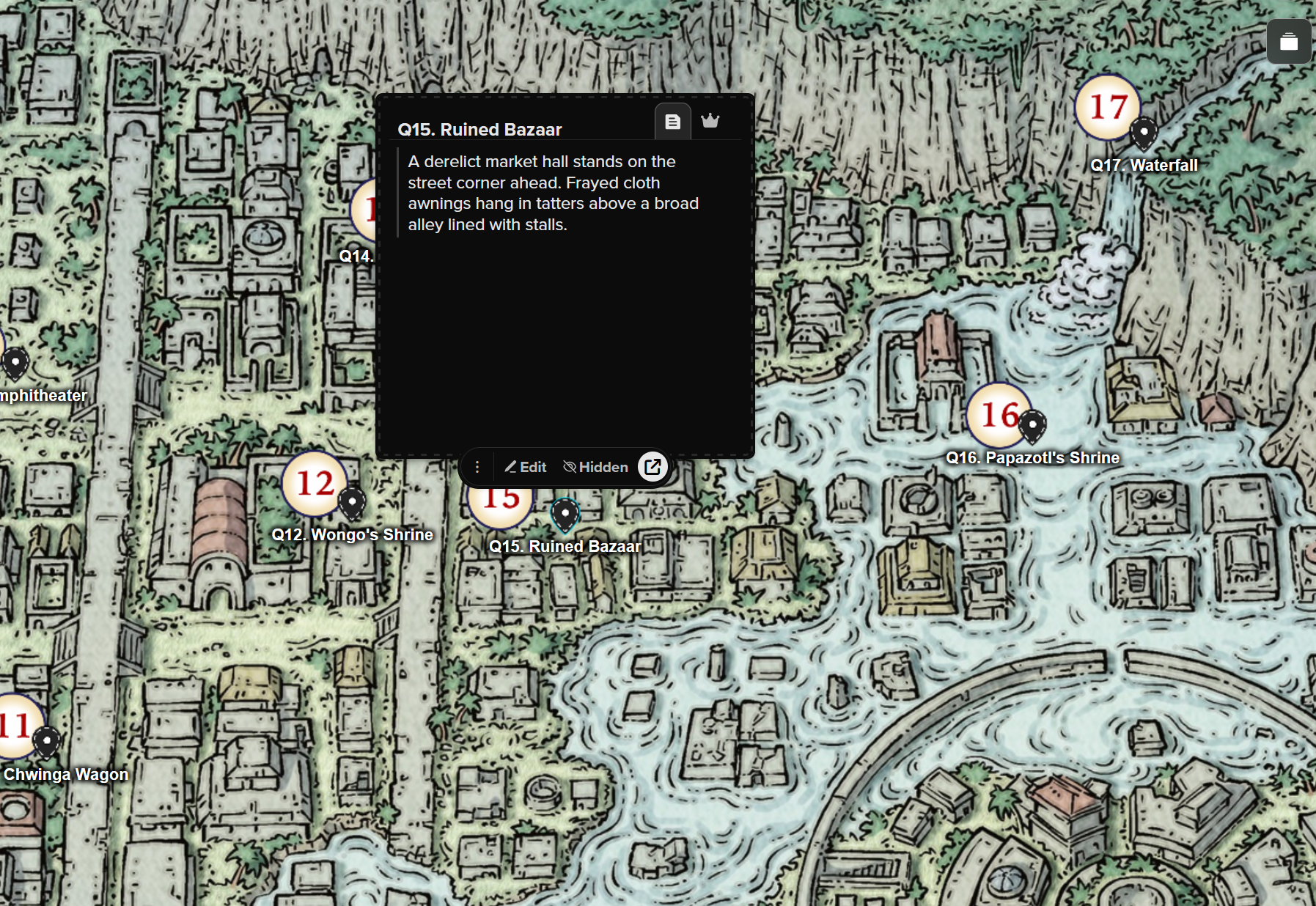

The “Lost City of Omu”’s general structure acts like a sandbox for the players to engage in several locations that offer multiple solutions to “solve” or simply interact with Points of Interest & ambient events.
For example, while searching for the next temple, players may find themselves needing to cross a flooded section of the city and discover the most immediate path as a fallen tree spanning both sides of a river. If players decide to cross it, this triggers an “NPC encounter” by ambushing the adventuring party. This ambient event is unknowingly triggered by the players and presents several solutions for the party to engage with.
With over 20 locations and ambient events, I designed the “Lost City of Omu”s questline to feel very organic and malleable, while still maintaining a clear main objective of finding and recovering the missing 9 artifacts from the scattered “mini-dungeons” throughout the city.
Major Locations: The 9 Temples
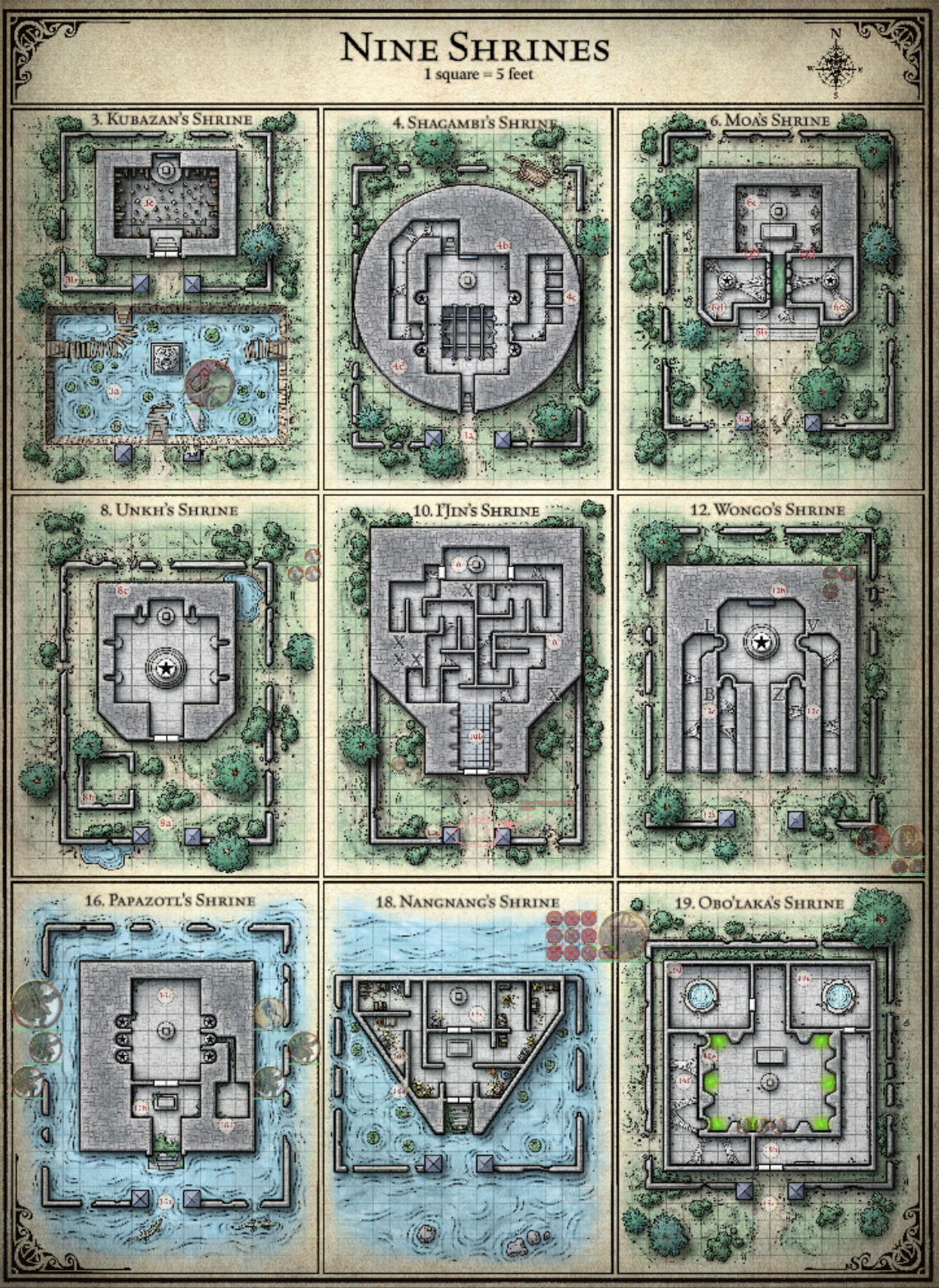
Nine Shrines map provided by Wizards of the Coast
While designing the “Lost City of Omu”, I prioritized 9 key locations that housed the missing artifacts needed to progress in the campaign. To make sure players were fully engaged and challenged within such a sandbox-style quest, I needed to make sure each location felt unique, but to also provide gameplay variations in the form of combat, puzzle and roleplaying encounters. I was lenient in the “correct solution” for a temple to encourage player ingenuity.
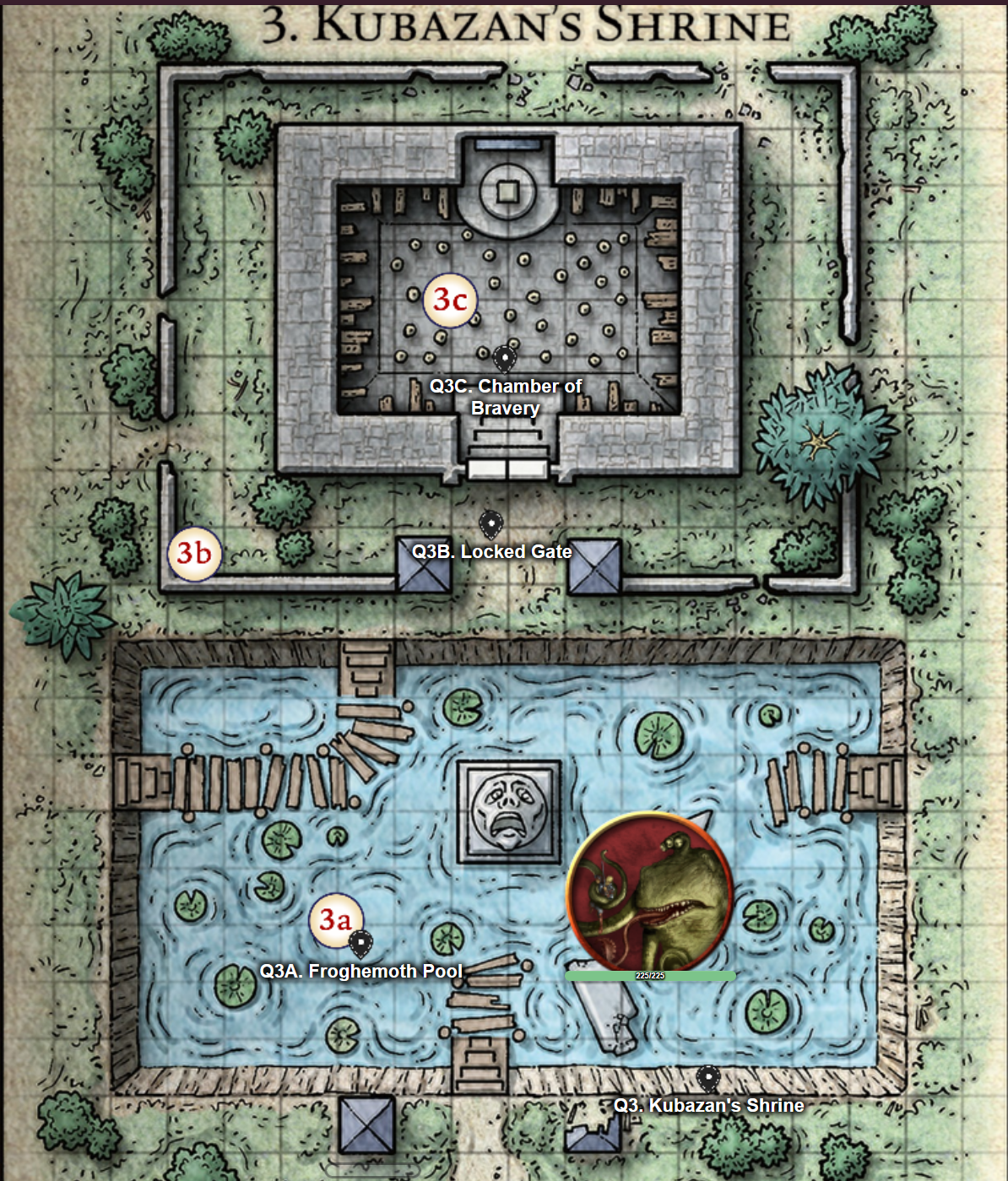
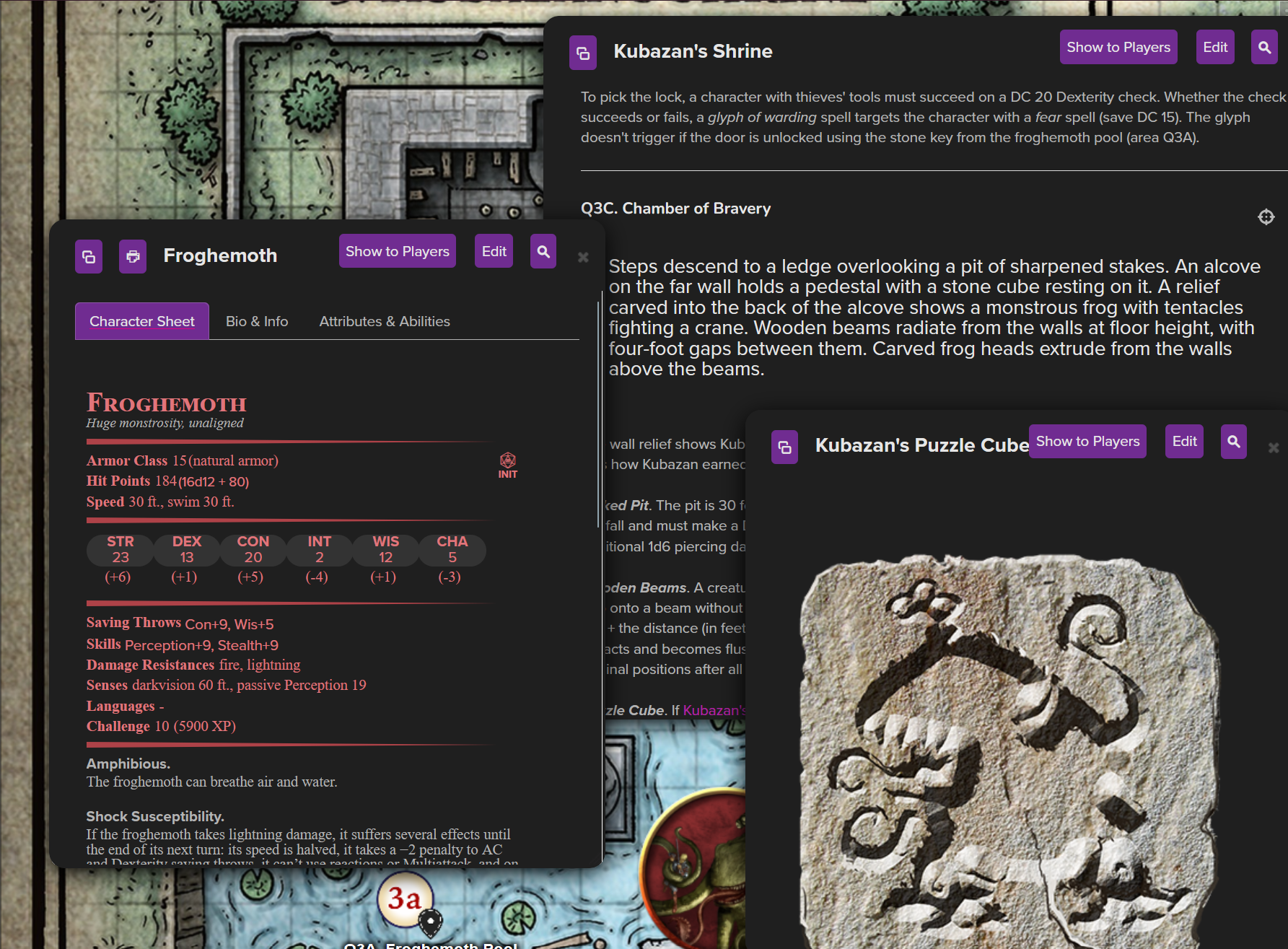
For example, while designing the “Shrine of Kubazan”, I introduced a large pool of water with a temple at the opposite side. This shrine is primarily separated into two sections. The first section allows players to either “deal” with the massive creature lurking below, a “froghemoth” by using their characters abilities to possibly charm or bargain with the creature. This encounter may also be simply a chance for a dangerous combat encounter, but by designing for both outcomes, gives the players more direct agency over the quest.
The second section of this “mini-dungeon” is primary geared towards collecting an artifact across a dangerous pit filled with spikes and only loose planks & platforms to jump across, similar to a traditional platforming segment. While designing this segment, I also had to take into account alternate solutions players might cross the chasm with magic or other alternative means.
I presented a problem for players to solve that allowed for flexibility and rewarding ingenuity within each of the 9 temples.
Design Techniques within “Tomb of Annihilation”
Player Interaction
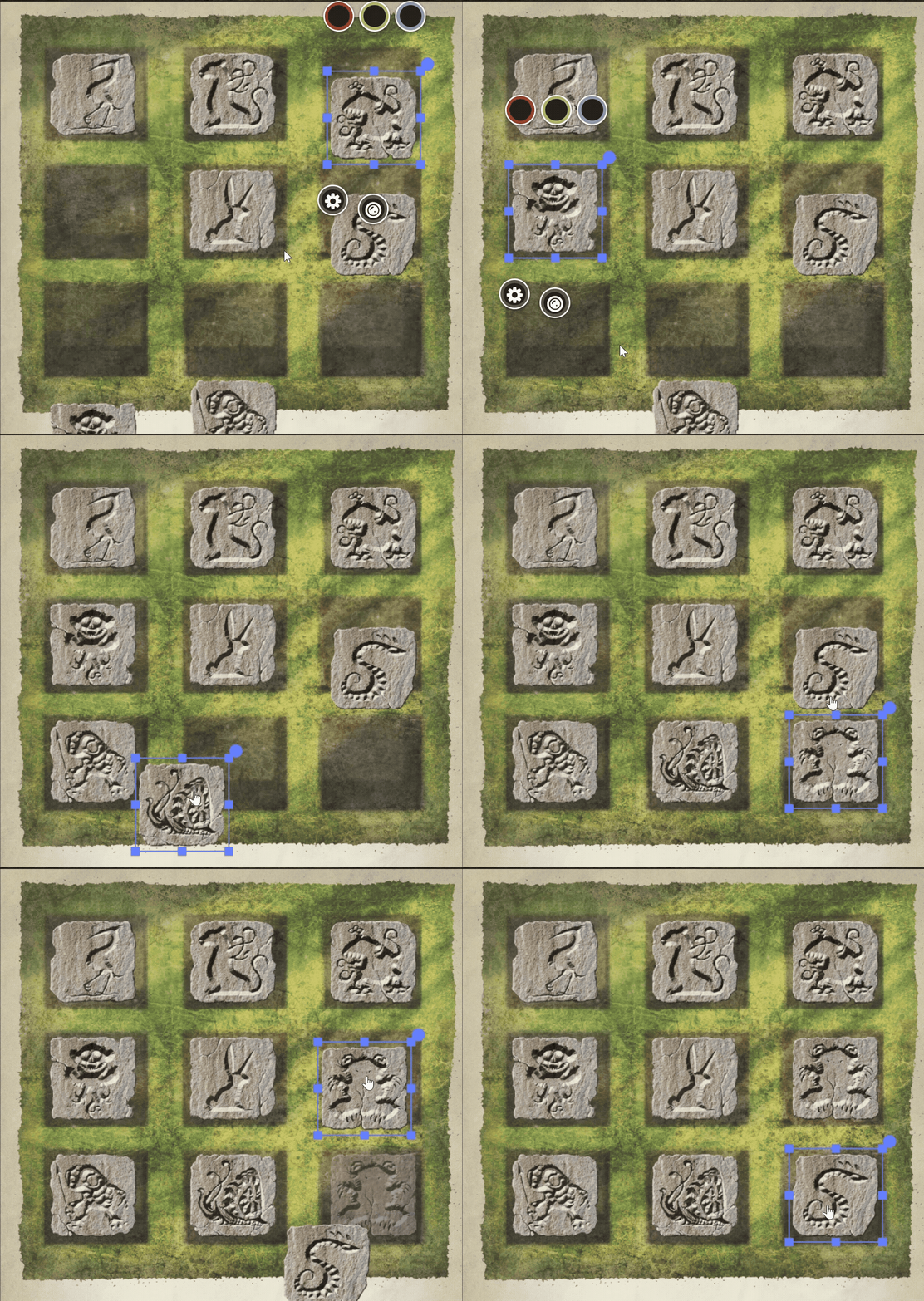
I designed quests for Tomb of Annihilation that prioritized player agency and the ability to “interact” with puzzles and the environment. I created several solutions to puzzles and if the adventurers discovered a unique way to the puzzle, I had to flexible and rely on my ability to improvise, which encouraged the whatever the most engaging solution is for a quest.
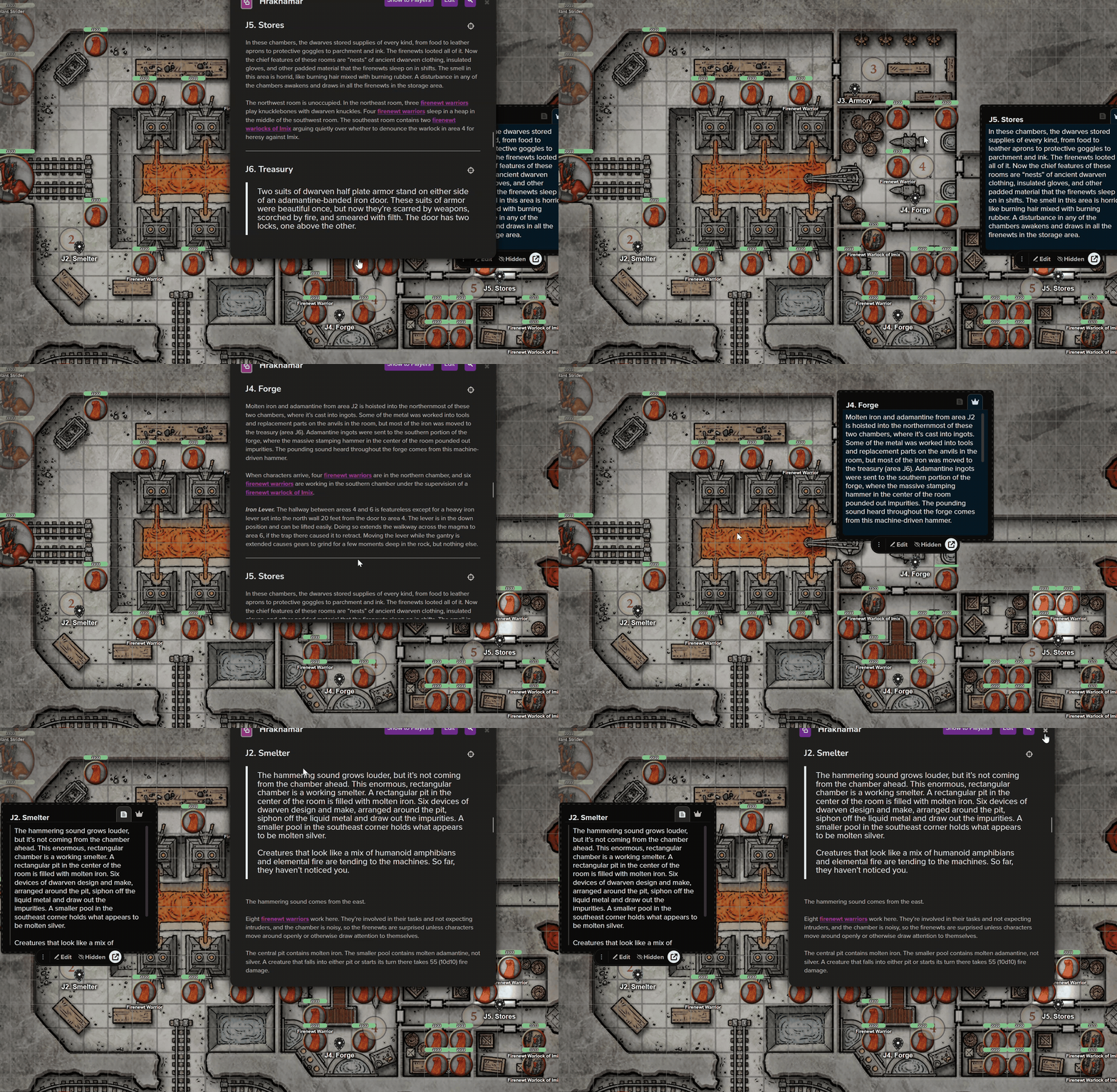
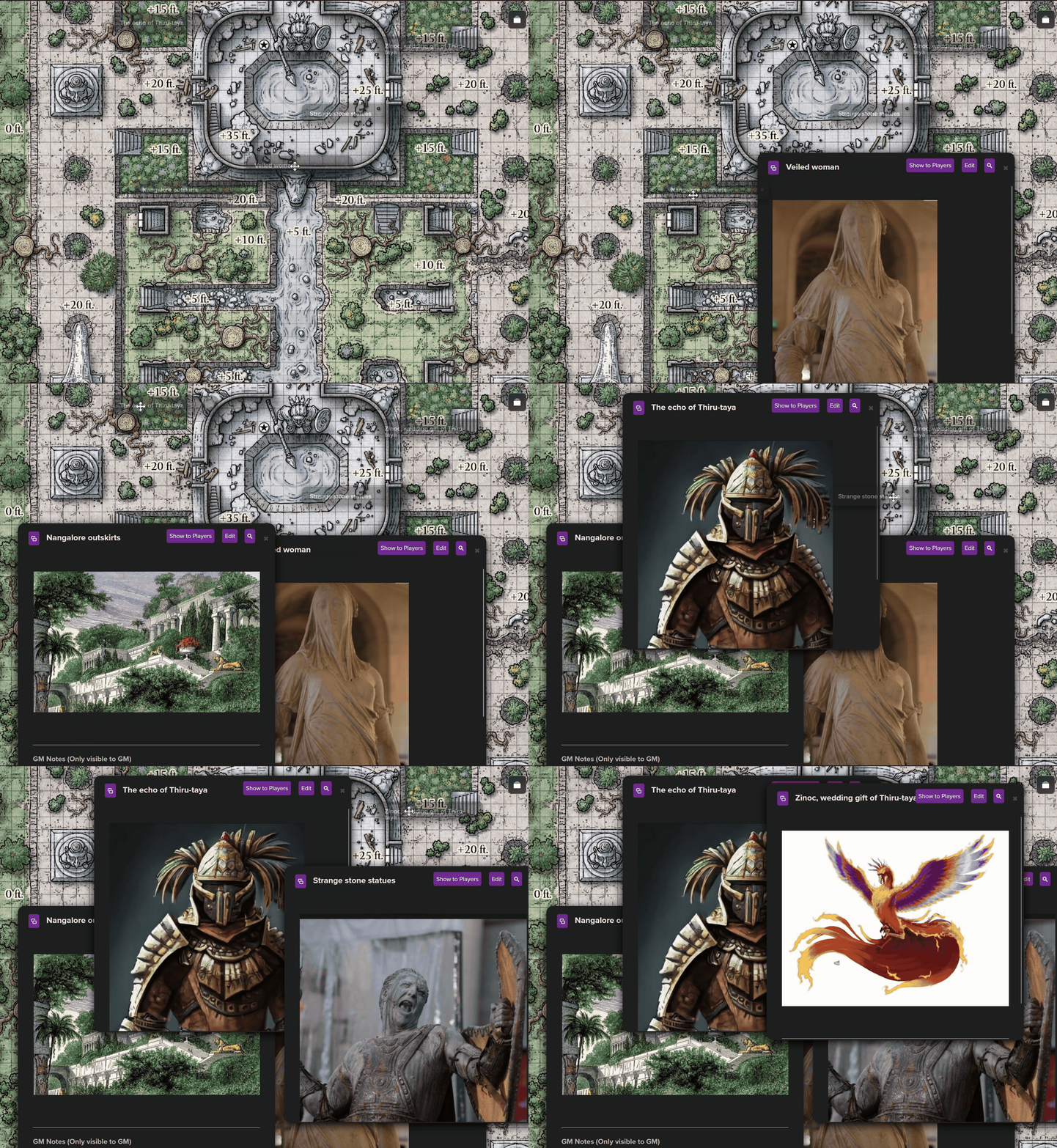
Before & After Player Interactions
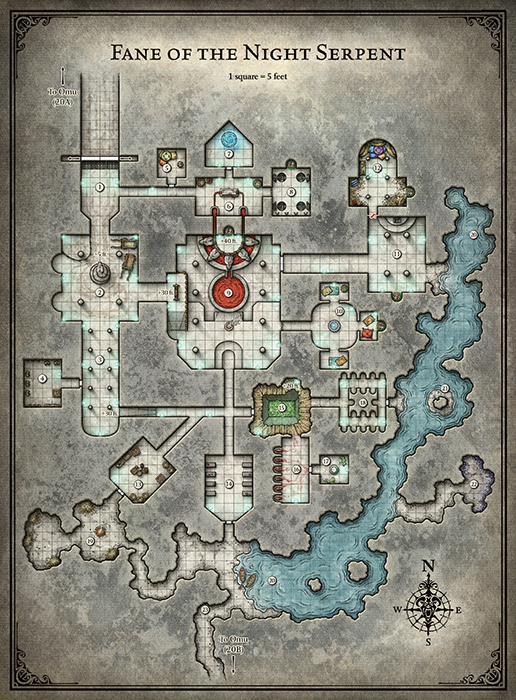
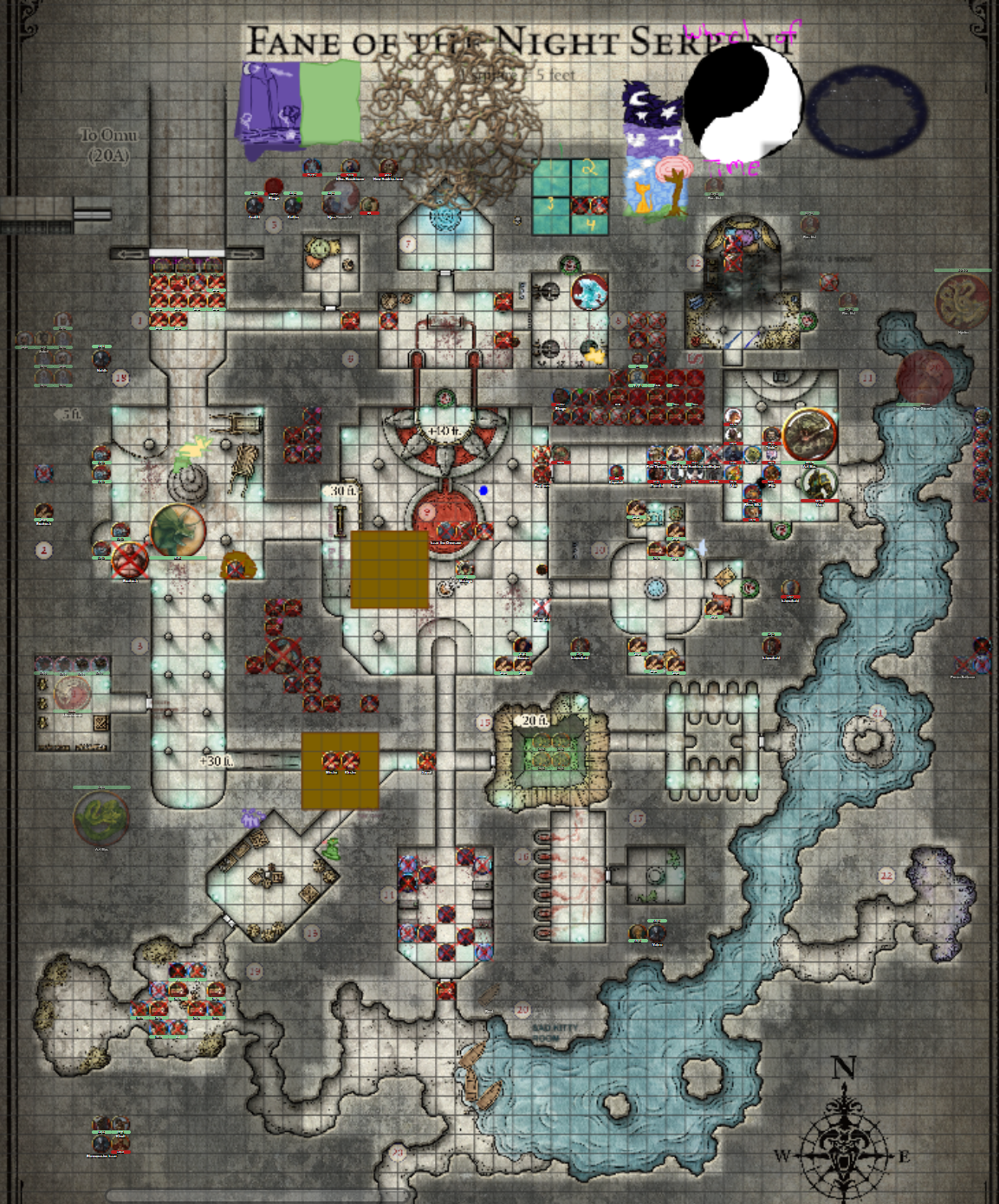
Fane of the Night Serpent dungeon provided by Wizards of the Coast
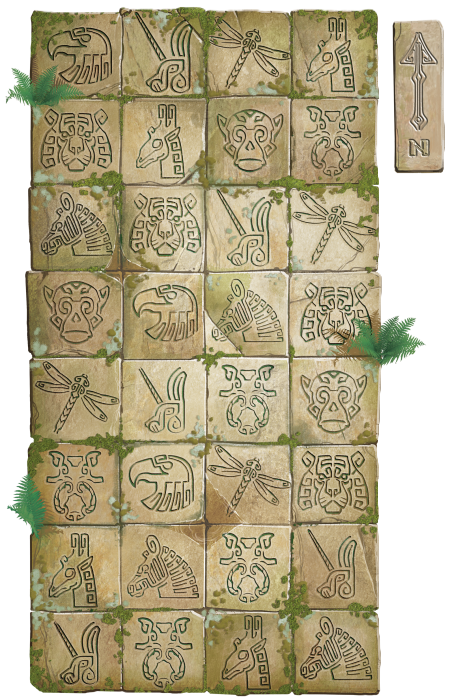
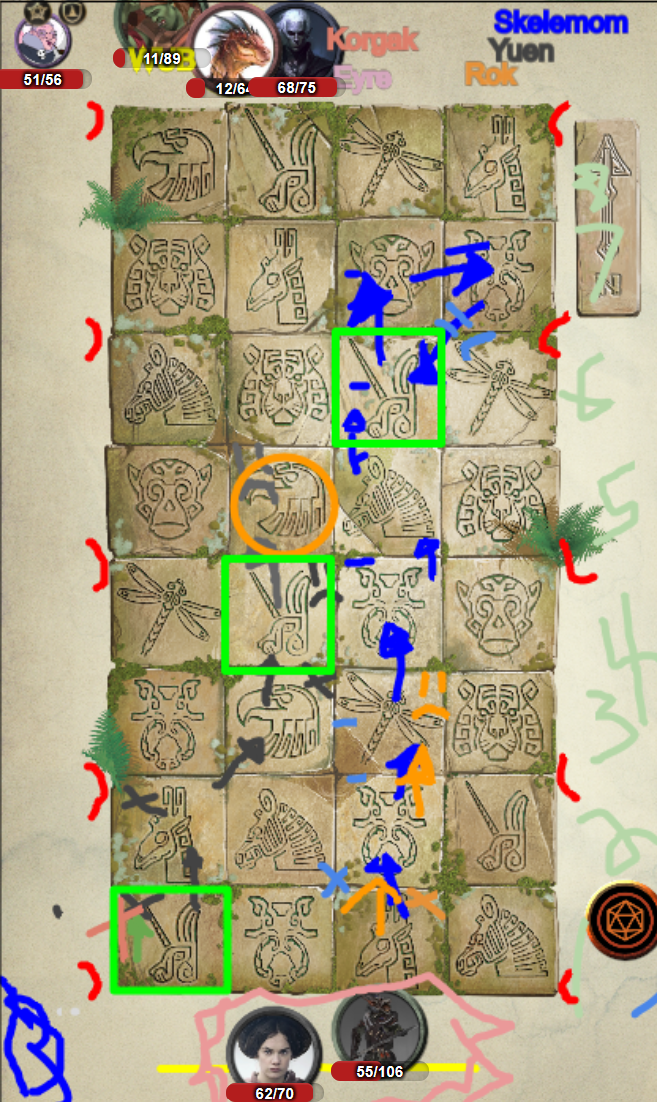
I’jin’s Puzzle provided by Wizards of the Coast
Item Design
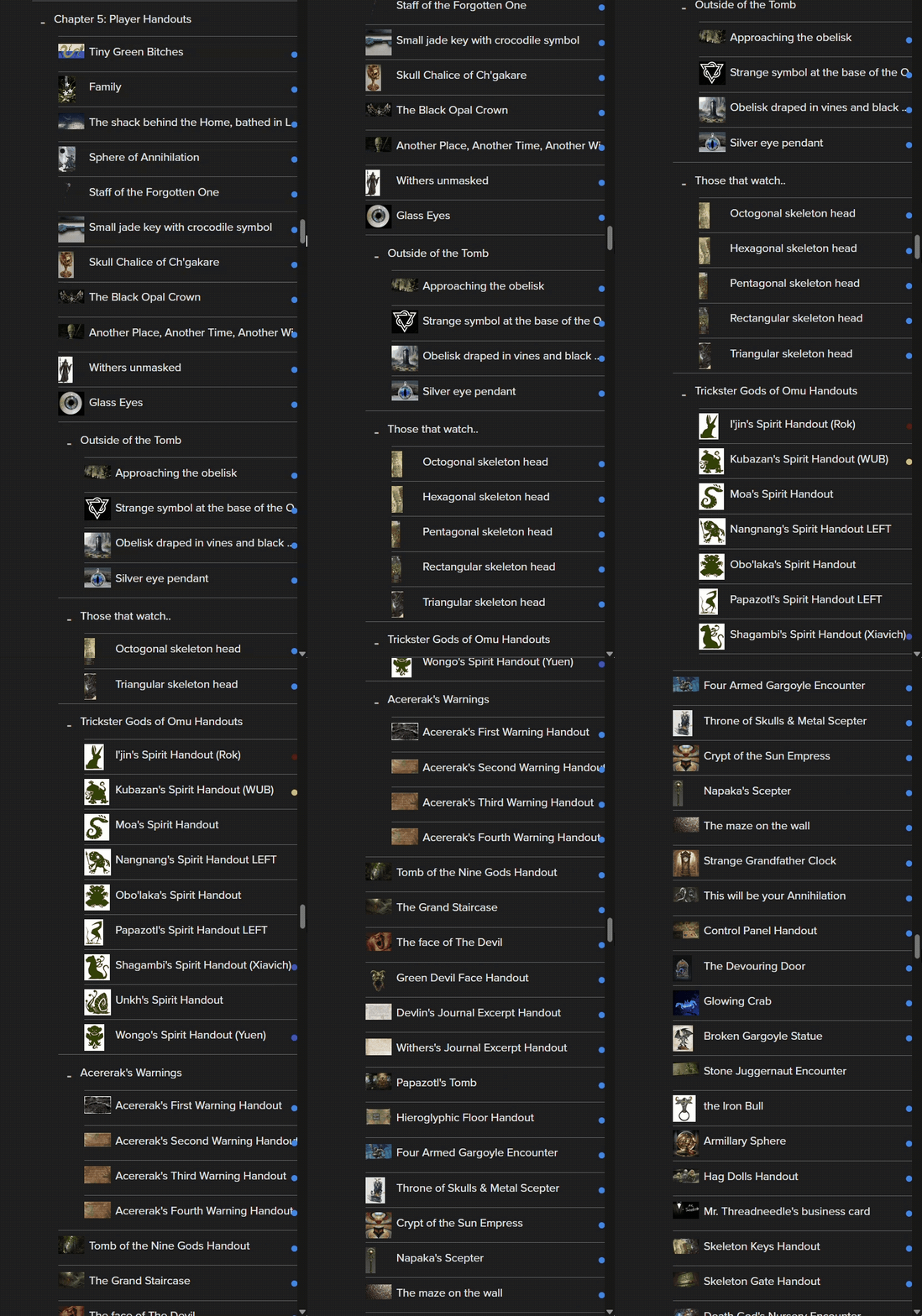
A collection of major boons given to players after defeating an optional boss (The King of Feathers)
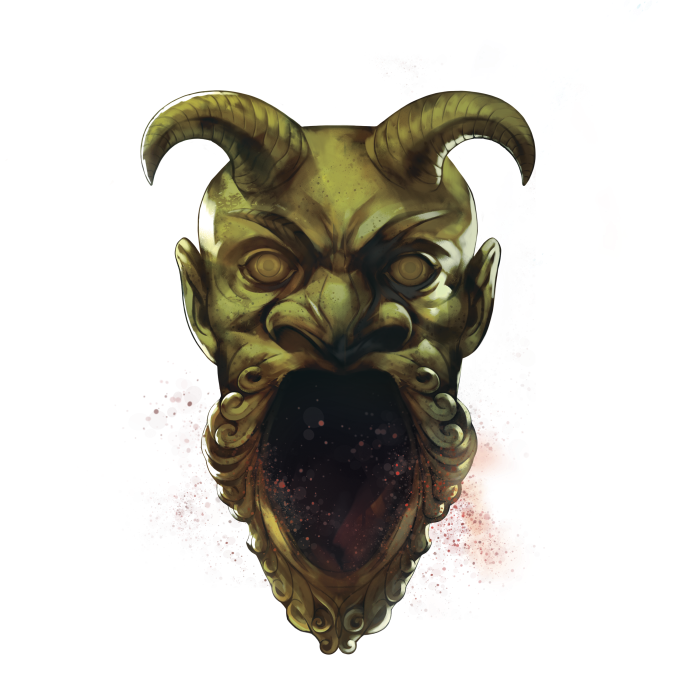
I created unique items & boons for my players that added to the overall worldbuilding of Tomb of Annihilation. I strategically placed rewards for competing milestones, or rewarded for exploring and engaging with the world. I balanced each item & boon to feel powerful, but fair within the overall experience.
A unique sword (Flame Tongue) given as a major reward, art provided by Wizards of the Coast